“The hanging gardens of Babylon.” – F. Scott Fitzgerald
Location
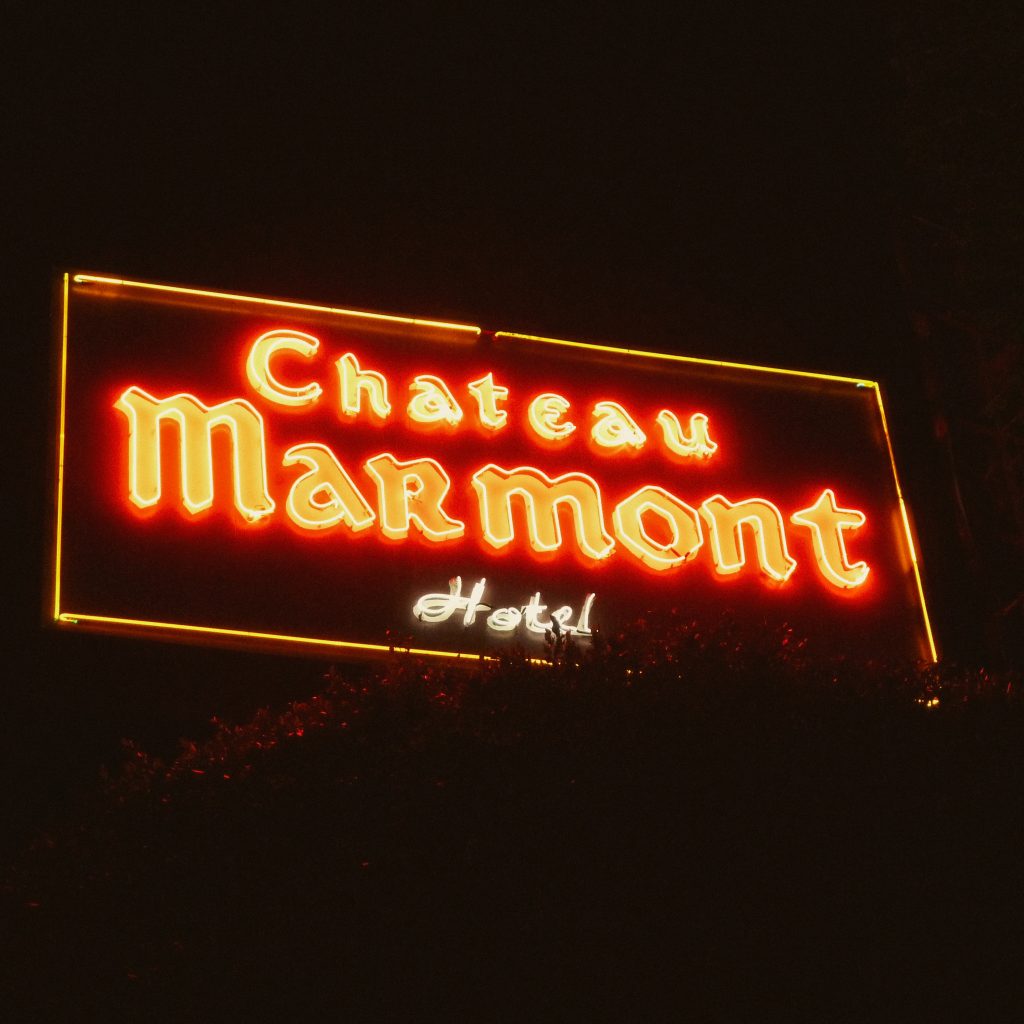
In West Hollywood, nothing looks out of place. So when driving east on Sunset Boulevard you are greeted by a white turreted castle, guarded by dense foliage and palm trees, it barely registers. A red neon sign marks the spot: Chateau Marmont.
Built in 1929 and based on the former royal Château d’Amboise in the Loire Valley of France, its origins were to serve as opulent apartments for New Yorkers staying in Los Angeles. Most notably known as a sanctuary, whether that be short or long-term, for A listers, rock stars and artists. Acquired in 1990 by hospitality mastermind André Balazs, who carefully preserved the charming character and history of this Hollywood legend whilst semi-modernising its interiors to what it is known as of today.
Atmosphere
The mystique associated with this institution is maintained via towering thick hedges that seclude the property, creating a glamorous enclave away from the eyes of the curious public. There is a knowing here not to take photos, and the staff are tuned to ensure absolute ease and discretion for its high (and low) profile guests.
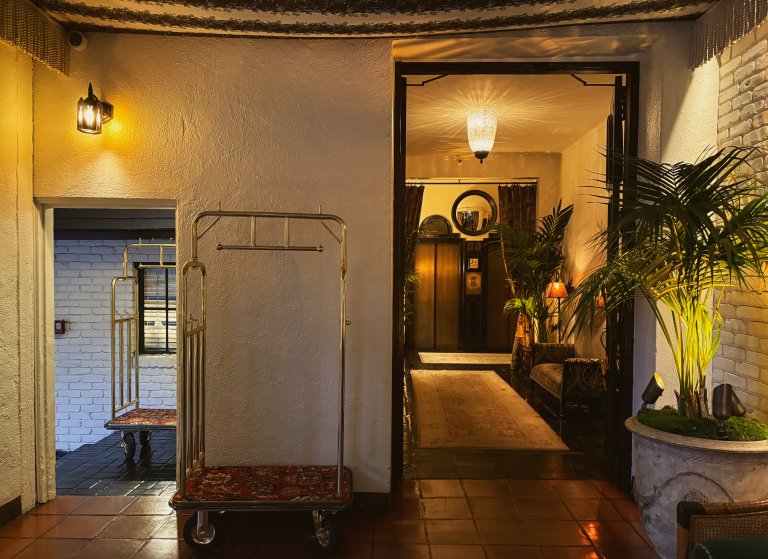
Inside seems perpetually poised between dusk and midnight. A subdued amber glow emanates from vintage candle-style fixtures. The walls are crowded with accumulated memories, framed photographs of celebrities, posters and memorabilia through the generations, serving as a reminder of the almost folkloric stories created within these white walls. There is a distinct scent that is inseparable from the building itself. Signature scented candles burn throughout and a faint aroma of cigarette smoke lingers in each room, a complete rarity in Los Angeles. You’ll notice the emblem of a mischievous Pan, Greek god of the wild and nature, dotted throughout the hotel, reminding guests of the mythological hedonistic allure contained within.
Design
Architecturally the Chateau is French Gothic, modernised by the neon signs, electric candlelight fittings and red carpets. Separate from the main building are Spanish style cottages and Modernist Bungalows. The interior is full of character, dramatic yet not too much, melding the Gothic Spanish colonial revival and 1930s Old Hollywood style. The lobby is grounded by a black lacquered floor and set with dark wood furniture. Oil paintings and medieval-esque wrought iron light fixtures are interspaced between pointed arch windows. Mismatched rich patterned carpets, curtains and vintage furnishings soften the space beautifully.
Outside in the Garden Courtyard, an enchanting indoor-outdoor area created by Arabian style yellow and red tents hosts the dining area. Matching bistro-style wicker tables, chairs and benches are interspersed between trees and greenery and the patio is characterised by a chessboard pattern of squares of grey stone slabs laid over the grass.
Rooms & Suites
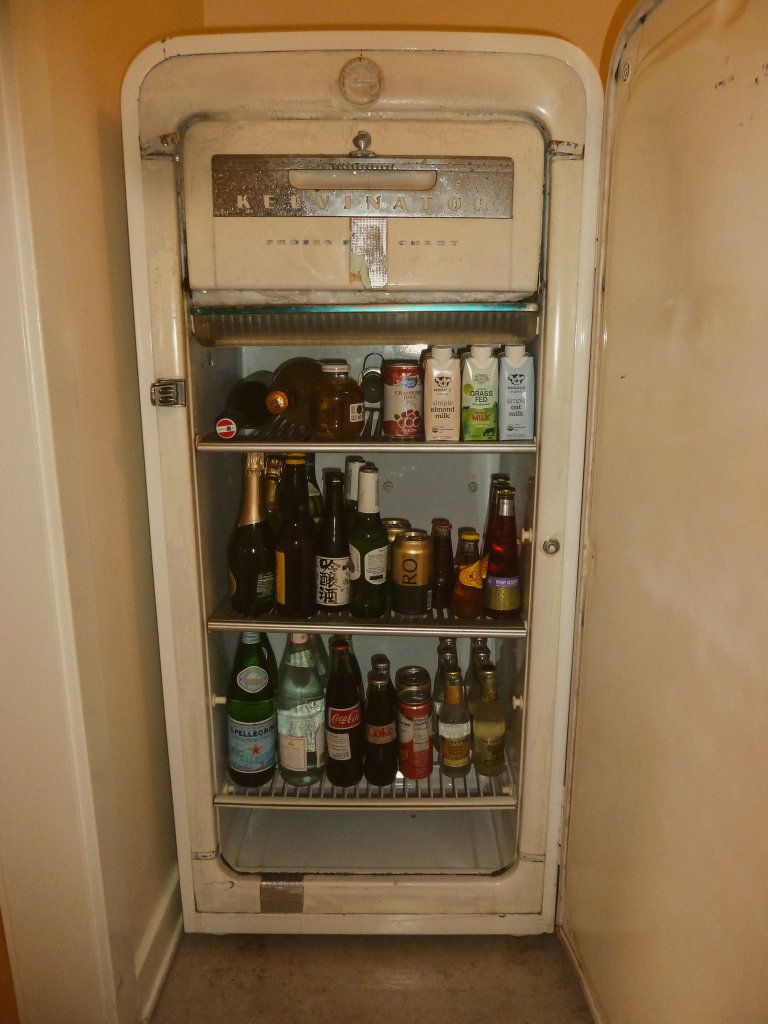
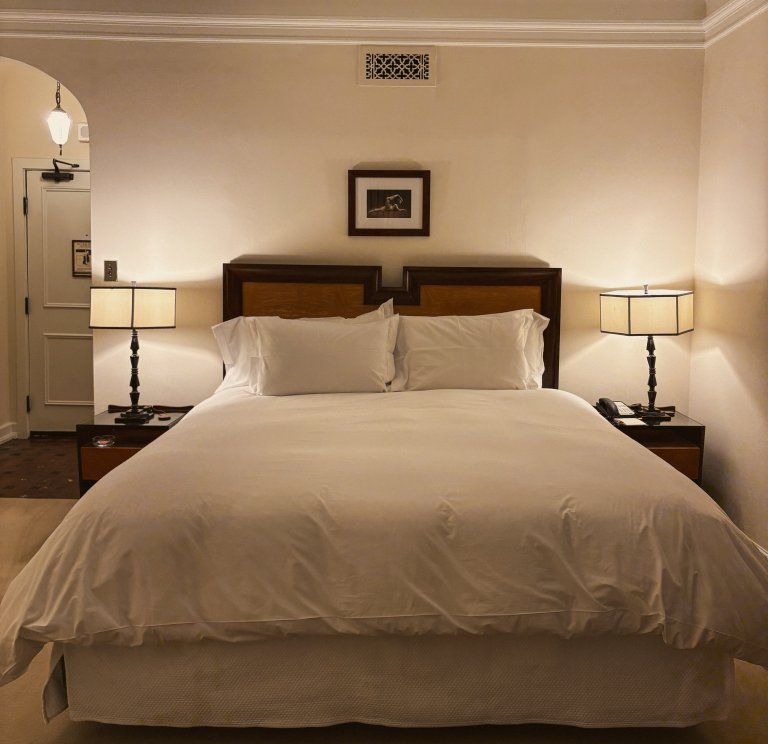
The 63 rooms and suites ring true to their origins as residential apartments. Most have living rooms, bathtubs and a full kitchen complete with retro appliances, including a 1950s Kelvinator brimming with an abundance of drinks. Some have balconies and private terraces, and the Premier suites and Penthouse have patio terraces with views of Los Angeles and the hotel’s pool and garden. For a more secluded hideaway, away from the scene of the main building are 9 cottages and 4 Modernist bungalows, amidst the lush foliage of the garden.
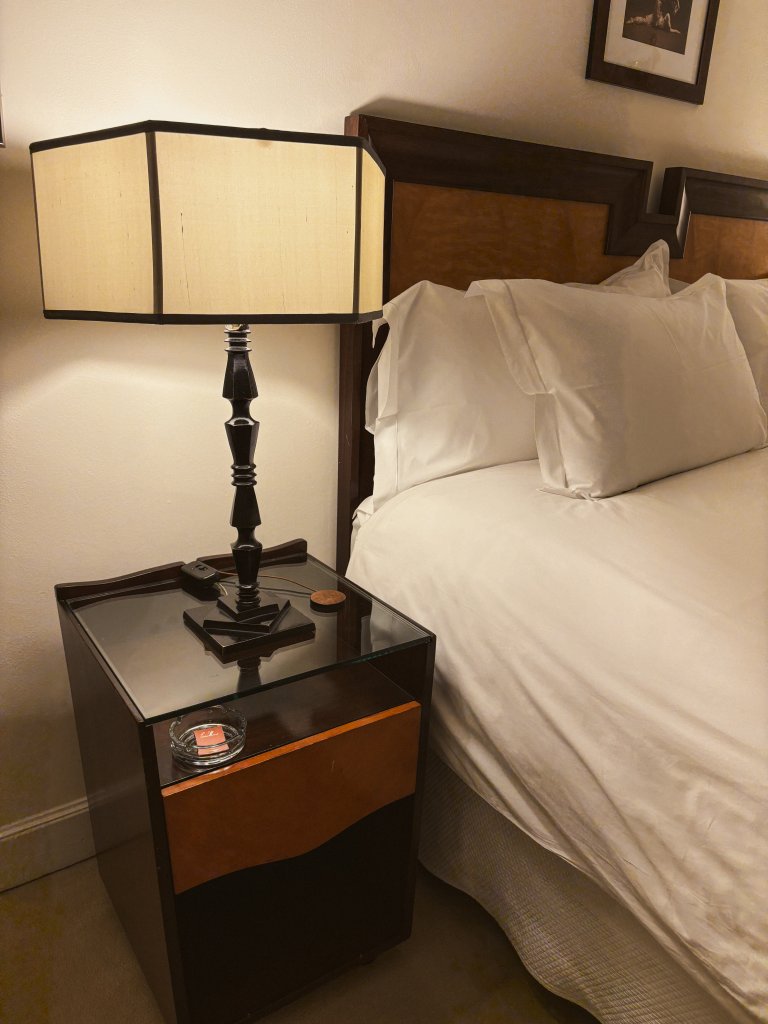
Compared to the extravagant curated communal areas, the passage of time seems suspended within the rooms, with the decor remaining relatively unchanged over the decades. The warped windows, occasional cigarette burn and well-worn bathrooms are reminders that for almost a century, this has been a haven for hedonism. There are rare moments of the polished present-day, such as the Dyson Airwrap stowed away in a cupboard and custom Davines toiletries in the bathroom. Upon arrival, a bowl of fresh red apples, ashtrays on the nightstands and a personalised letterhead on the writing desk awaits.
Dining
With only one restaurant on a reservation only basis, registered hotel guests are prioritised for bookings. The menu encompasses Italian and French inspired classics such as a hearty spaghetti bolognese, steak frites with bordelaise sauce and steamed mussels. The dishes are unpretentious, fun and versatile. A highlight here is the fresh shucked oysters, sourced from both East and West coasts, plated accordingly.
The Garden Courtyard is the prime dining spot due to its heady atmosphere in the evenings. For a more cosy lounge-style dinner setting, the lounge is perfect. Guests are welcome to arrive a little ahead of their reservation and enjoy a cocktail in the intimate Lobby Bar. Breakfast is served in both the Garden Courtyard and the Lobby Bar, offering traditional breakfast dishes and American classics.
Wellness
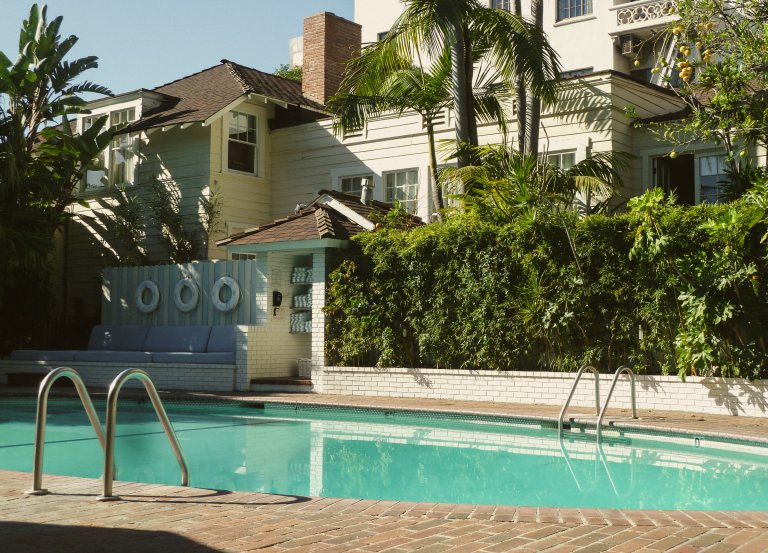
With no dedicated spa area, massage therapists and beauty treatments can be taken in guests rooms upon request. The attic is home to a retro gym with a vaulted ceiling, and private trainers can be arranged by the concierge. Outside, the oval shaped heated pool is guarded by cascading bamboo shoots in the garden. Guests can enjoy al fresco dining and cocktails on the 1930s sun patio, ordered via a vintage telephone placed by the pool.
Closing
Most golden eras are only named once they have ended, once something flatter and more commoditised has taken their place and you are left comparing the present unfavourably to a past you did not appreciate enough at the time. The Chateau is different. There is no infinity pool, no army of staff refolding your towels into swans, no ten point checklist of five star credentials. What there is, instead, is the rare and slightly disorienting sensation of being inside the good times while they are still happening. You are not waiting for this era to become a story you tell later. You are already living the version people will eventually grow nostalgic for. That is a far harder thing for a hotel to deliver than thread count or marble, and it is the feeling The Chateau has never stopped getting right.
